
Which mode of transport should you choose for sustainable travel in Europe?
Travelling more responsibly also means choosing your mode of transport carefully. Whilst there is no one-size-fits-all, ideal solution, some modes of transport have a much lower environmental impact than others. The travel distance, your destination, your budget and convenience: all these factors can influence your choice. Find out about the advantages and things to bear in mind for each mode of transport to help you plan a more sustainable trip around Europe.

What is the best mode of transport for travelling responsibly?
There is no single answer to this question. The most sustainable mode of transport depends above all on your destination, the travel distance, the number of passengers, the length of your stay and the available infrastructure. Generally speaking, the train is the preferred mode of transport whenever it allows you to reach your destination. For shorter journeys, cycling or public transport are excellent options. Conversely, flying remains the mode of transport that emits the most greenhouse gases per passenger. However, some journeys can only be made by plane, particularly when travelling to another continent or a region with limited transport links.
However, the choice of transport is not limited to a comparison of CO₂ emissions. A car journey, for example, may be a better option if several people are travelling together, whilst a ferry can be an attractive alternative when it replaces a flight. The option to take your bike with you, for easier access to the city centre, the actual journey time and connections are also factors to take into account.
Finally, travelling more responsibly does not mean striving for perfection. Choosing a suitable mode of transport, limiting unnecessary journeys, opting for direct routes where possible, or extending your stay to avoid making multiple trips are all steps that help to reduce the environmental impact of your travel. The key is to make an informed choice, taking into account your circumstances and the alternatives available to you.

By plane
When flying is the only realistic option, there are a few simple steps you can take to minimise its environmental impact. Before booking, find out about the airline’s commitments to reducing greenhouse gas emissions. Some airlines are investing in renewing their fleets with more fuel-efficient aircraft. Others are expanding the use of sustainable aviation fuels. Still others are trying to reduce their fuel consumption during ground operations and in flight. These initiatives are no substitute for flying less, but they do help to raise awareness.
Should you offset your carbon footprint when buying a plane ticket?
Major airlines offer schemes to contribute financially to environmental projects. These programmes may support initiatives such as reforestation, ecosystem conservation or the development of renewable energy. However, they do not fully offset the emissions generated by the flight. Do not regard them as a miracle solution.
In 2023, the European Consumer Organisation (BEUC) lodged a complaint against several airlines, arguing that certain claims relating to “carbon-neutral”, “offset” or “sustainable” flights amounted to greenwashing. According to the BEUC, carbon offset schemes do not guarantee that a flight’s emissions will be cancelled or neutralised. The projects funded may have positive effects on the environment. However, their actual impact varies depending on the circumstances and can sometimes be difficult to assess.
The BEUC also points out that sustainable aviation fuels, which are often highlighted in marketing materials, currently account for only a small proportion of the fuel used by the aviation sector. They do not make a flight carbon-neutral. European consumer protection authorities have, moreover, launched investigations into certain environmental claims made by the aviation sector to verify that they are based on scientifically verifiable evidence. This has resulted in a commitment from 21 European airlines.
Carbon offsetting should therefore be seen as a potential means of supporting environmental projects. It is not a way of cancelling out the carbon footprint of one’s journey.
By train
The train remains the most environmentally friendly way to travel around Europe. International rail services have expanded considerably with the opening of new lines and the arrival of new operators. It is now possible to travel between many European capitals by combining domestic and international trains.
Programmes for exploring Europe by train
The Interrail Global Pass allows you to travel between major capital cities with complete flexibility, giving you access to rail networks in around 30 countries. It is a particularly popular option for travellers who wish to explore several destinations without having to make multiple bookings. Europeans aged 18 can also explore Europe by train through the DiscoverEU programme.
Sleeping while travelling?
Night trains have also made a big comeback. Whether you’re travelling to Vienna from Brussels, Berlin from Paris or Stockholm from Hamburg… you can cover long distances whilst reducing your carbon footprint and saving on a night’s accommodation.
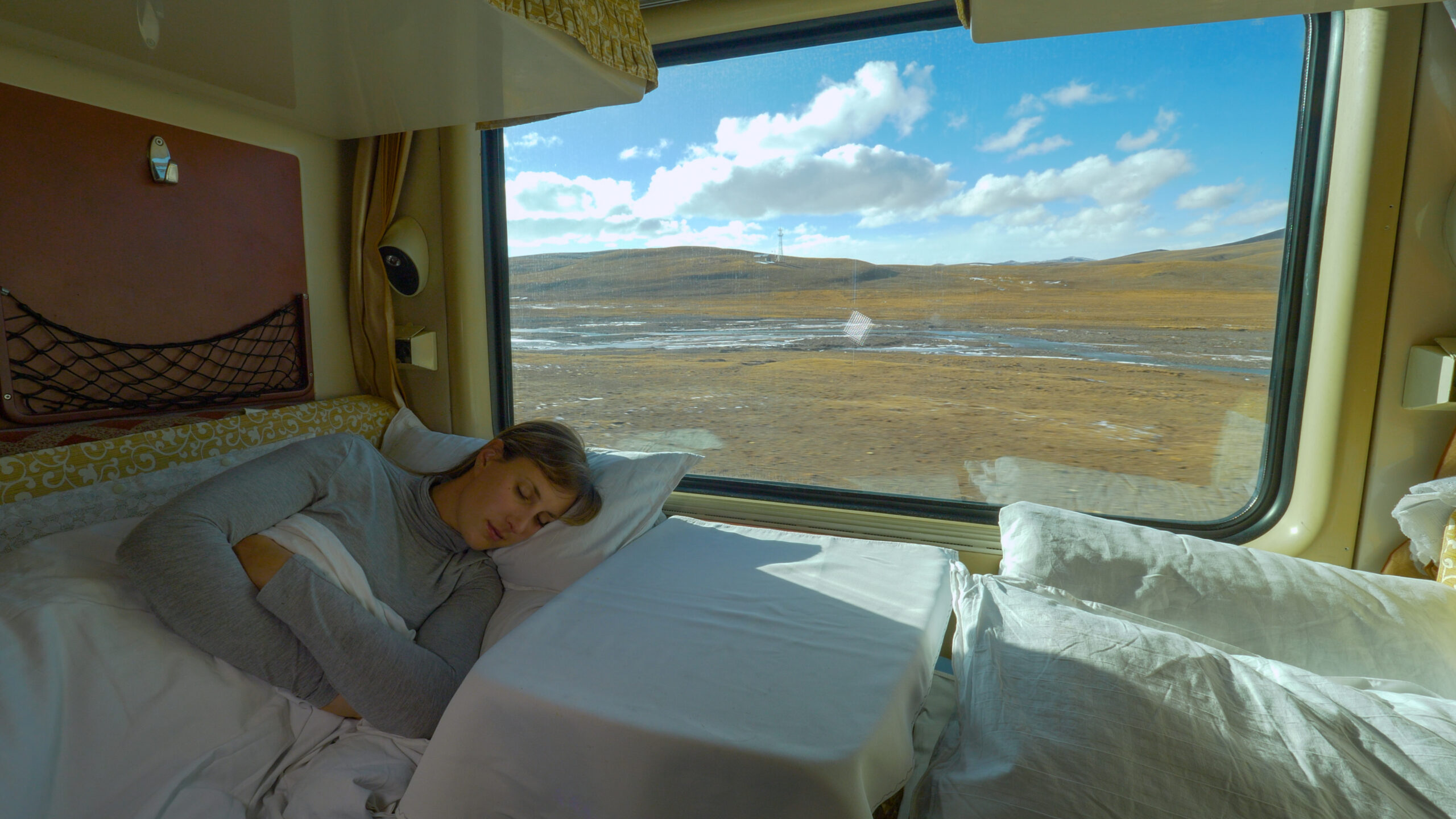
A convenient mode of transport… but one with certain limitations
The train also offers other advantages that are often overlooked:
- Stations are generally located in city centres.
- Boarding procedures are quicker than at airports.
- Luggage restrictions are often less stringent.
For medium-distance journeys, the overall journey time can therefore be comparable to that of flying when you take into account travel time to airports, security checks and waiting times.
Organising a rail journey across several countries may sometimes require combining services from different operators. The European Commission is also working to further simplify the booking of international journeys. It aims to strengthen passengers’ rights through the “one journey, one ticket” principle.
Tips :
- To get the best fares, book several weeks in advance for international routes and night trains.
- Don’t hesitate to compare the offers available from different rail operators or specialist booking platforms. This will help you optimise your itinerary and your budget.
As with any mode of transport, passengers have rights in the event of delays, cancellations or missed connections. European regulations provide for assistance and compensation mechanisms in certain situations. To find out about your rights and the steps to take, consult our free interactive tool.
By bike
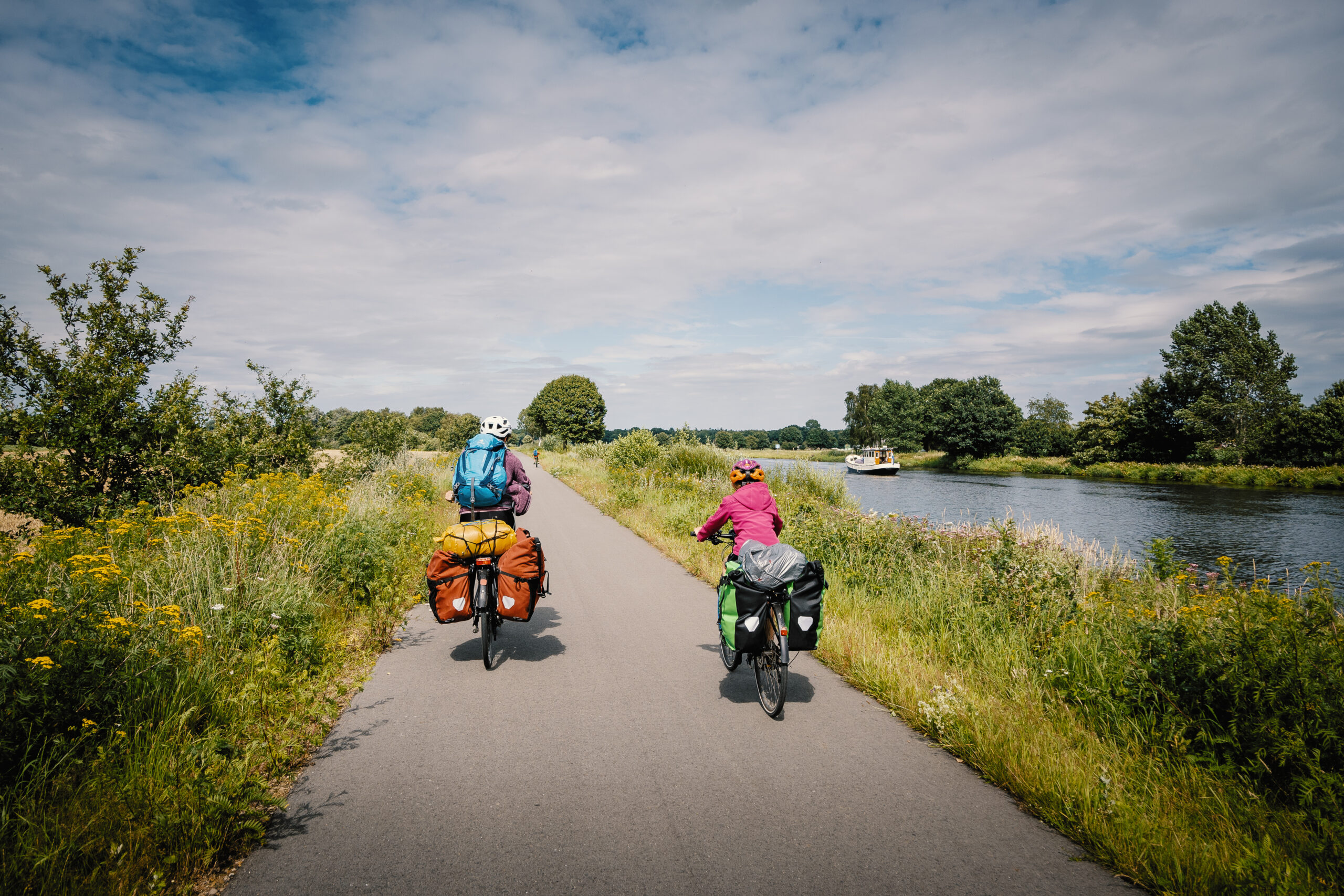
For the more adventurous, cycling holidays are attracting an increasing number of travellers. Europe boasts an extensive network of cross-border cycle routes. Among these, the EuroVelo network links towns, countryside, rivers and coastlines across dozens of countries. Developed on a European scale, EuroVelo comprises several major routes totalling tens of thousands of kilometres. One of the main advantages of the EuroVelo website is that it provides a wealth of practical information to help you plan your trip. There you can find:
- Detailed maps
- Difficulty levels
- Route descriptions
- Suggested stops
- Tourist and cultural attractions
- Advice on services available along the route
This type of trip does, however, require some preparation. It is important to check the condition of your kit and to ensure you have all the equipment required in the country you are visiting (helmet, lights, etc.). You must plan your daily distances carefully.
Finally, cycling can also be easily combined with other modes of transport, particularly the train. Many European rail companies now allow bicycles on board. Check with each operator for their conditions regarding the carriage of bicycles.
By carpooling
Why not share a lift on your holiday journey? Carpooling is a common way to travel between many European cities. It allows you to share travel costs and reduce the number of vehicles on the road. In some cases, carpooling makes destinations that are less well served by public transport more accessible. There are now many platforms that help connect drivers and passengers, making it a flexible option for long-distance journeys.
By bus
In line with this same concept of shared mobility, long-distance bus routes also offer an attractive option for travelling across Europe. They serve a large number of cities, often at competitive fares. And they provide an alternative to flying or travelling by private car. Some routes even allow you to travel overnight, thereby making the most of your journey time.
Bus passengers also have rights in Europe. In the event of a significant delay or cancellation, there are rules governing the information passengers must receive, the assistance they must be provided with and, in some cases, the conditions for reimbursement or re-routing.
By boat
River tourism offers an original and eco-friendly way to discover Europe in a different light. A cruise on the Rhine, for example, allows you to travel through several countries as you follow the course of the river. In France, the network of waterways is particularly well-developed25. The country has around 8,500 km of canals and rivers, making it one of the most densely networked in Europe. This type of trip offers a leisurely experience.
The ferry is also an attractive option for reaching certain islands or crossing straits. When a destination is accessible by both plane and boat, the ferry may take longer. However, it often produces less CO₂. It also allows for greater flexibility when it comes to luggage. In some cases, you can take your car or bike on the ferry, so you can get around once you arrive. As with other modes of transport, ferry passengers have certain rights in the event of significant delays or cancellations.
You might also be interested in
Funded by the European Union. Views and opinions expressed are however those of the author(s) only and do not necessarily reflect those of the European Union or the European Innovation Council and Small and Medium-sized Enterprises Executive Agency (EISMEA). Neither the European Union nor the granting authority can be held responsible for them.
Was this article helpful?

